Monday, December 18, 2017

Jim's World

aa5


Next Sunday, an edition will be worked on.  Next Sunday is Christmas.

Why do we continue to work on this site 12 years later?

Well, it's fun.

But I don't think that's what Edward was wanting when he e-mailed asking his question.

12 years ago, BLOGGER/BLOGSPOT was still relatively new.

Sites sprung up all the time.

I assume they still do but I'm not sure.

I know a large number of people moved to WORDPRESS in 2008 when those supporting Hillary (this site did) were under attack from other sites.

We were more fortunate than many in that we didn't have the attacks so many did.

Or maybe we were just more used to attacks by then?

I think we've carved out our space online as the ones who go their own way.

And I think that's a good thing.

Last week, in an Iraq snapshot, C.I. noted:


The taxpayer draining waste that is THE NEWSHOUR spent a report 'on' Iraq refusing to note these basic realities and instead focusing on Iran versus the US.  And treating that as normal.  As if another country exists solely to be a test lab for the US and Iran.

They have done some lousy reporting on Iraq at THE NEWSHOUR last week but this tops even the nonsense already broadcast.

As usual, the Iraqi people are rendered invisible.

As usual the real problems are ignored.

Instead, PBS encourages you to feel superior to the Iraqi people and take part in 'superpower' wonderment.

They ought to be ashamed.


They should be ashamed.

But so should a lot of people.

Like me.

I actually watched that broadcast and thought it was informative -- at least in a minimal way -- and didn't think anything else of it.

Until the next morning, when I read C.I.'s comments above.

That's when I realized, "Wait, that wasn't a report."

It was a roll out.  It was state justification.

It was about how the US and Iran were engaged in a power struggle over Iran but that wasn't really said nor was it stressed that this was the battle between two governments and that the people in the US and Iran really weren't consulted or informed -- let alone the people in Iraq.

PBS didn't do reporting, it did normalizing.

And it's at moments like that where I'm glad we're still online -- as a community -- and glad we're still plugging away.  What one of us misses, another will catch.  I'm glad of what we've built online and what we've contributed.

So that's the answer to the question at its most simple.


Tweet of the week


  1. parliament rejects initiative to vest power in religious leaders to control all aspects of marriage, divorce, inheritance, erasing key human rights protections enshrined in law


Palm Springs historic city council

"Palm Springs is an inclusive world class city dedicated to providing excellent and responsive public services to enhance the quality of life for current and future generations."

That's the mission statement of the City of Palm Springs.

Most cities have mission statements.

What makes Palm Springs' unique?

Maybe that the California city has a unique city government:


Mayor Robert Moon
Email Mayor Moon
Councilmember Geoff Kors
Email Councilmember Geoff Kors
Councilmember J.R. Roberts
Email Councilmember J.R. Roberts
Councilmember Lisa Middleton
Email Councilmember Lisa Middleton
Councilmember Christy Holstege
Email Councilmember Christy Holstege


All five of the above sit on the city council.  All five are LGBT members as Javier Panzar (LOS ANGELES TIMES) noted last month.

Mayor Robert Moon is the third openly gay mayor of  Palm Springs -- a city of approximately 45,000 per the last US census.

GAY PALM SPRINGS notes, "The Gay population is now estimated at more than 50 percent of the annual resident population. Today the City of Palm Springs has the highest per capita gay population in the US, if not the world."


Video to stream


This edition's playlist


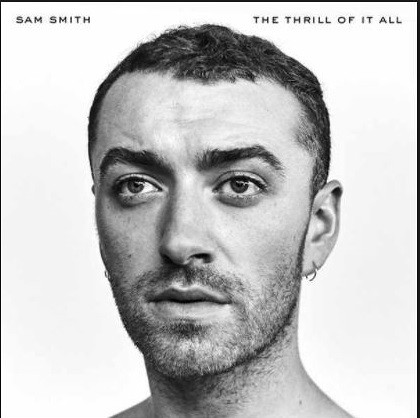
samsmith


1) Sam Smith's THE THRILL OF IT ALL.


2) Tori Amos' NATIVE INVADERS.


3) Diana Ross' DIAMOND DIANA: THE LEGACY COLLECTION.


4) Alicia Keys' HERE.


5) Janet Jackson's UNBREAKABLE.


6) Aretha Franklin's ARETHA SINGS THE GREAT DIVA CLASSICS.


7) Dinah Washington's THE ESSENTIAL DINAH WASHINGTON.


8) Nancy Wilson's LUSH LIFE.


9) Eartha Kitt's GREATEST HITS PURR-FECT.


10) Ben Harper's CALL IT WHAT IT IS.


‘Health Is a Right for All’, Secretary‑General Tells Forum, Advocating Universal, People‑Centred Coverage to Foster Resilience


 ‘Health Is a Right for All’, Secretary‑General Tells Forum, Advocating Universal, People‑Centred Coverage to Foster Resilience

Following are UN Secretary‑General António Guterres’ remarks at the Universal Health Coverage Forum, in Tokyo today:


I thank our co‑organizers and commend the Government of Japan for its leadership and vision in hosting this meeting.  Thank you also to Prime Minister [Shinzo] Abe for his exciting announcement of $2.9 billion for universal health coverage programmes.  Prime Minister Abe, your commitment to ensuring health for all — both here in Japan and around the world — is truly inspiring.  The announced programme highlights the importance of integrated action to deliver on the sustainable development agenda.

Our topic today — health — and our venue — Tokyo — are perfectly matched.  Japan was one of the first countries to demonstrate the power of universal health coverage, achieving it in 1961 and unlocking economic growth for the decades that followed.  Next September, we celebrate the fortieth anniversary of the Alma‑Ata Declaration, which famously set out a goal of achieving health for all.

Just two days ago, the world marked Universal Health Coverage Day.  Universal health coverage means just that: care and services for everyone; equitable access; quality care; affordable services.  Our goal must be to protect and promote physical and mental well‑being for all.

Health is both an outcome and a driver of progress.  It is at the centre of our vision of a more sustainable, inclusive and prosperous future.  And it is central to the peace and security agenda.  When we invest in health — particularly of women and adolescents — we build more inclusive and resilient societies.

Thanks to targeted investments in recent decades, we have made historic progress on a variety of health challenges.  More women have access to modern contraception.  Vaccination levels are up.  More people living with HIV have access to anti‑retrovirals.  More people at risk of malaria are sleeping under insecticide‑treated nets.  And an end to diseases such as polio is within sight.
However, gross inequities continue to leave the most vulnerable behind.  For too many, health is inaccessible, unaffordable or altogether unavailable.  Out‑of‑pocket spending on health causes an estimated 100 million people to fall below the poverty line every year.

In an increasingly interconnected world, an evolving global health landscape gives rise to new threats, such as antimicrobial resistance, the impacts of climate change and the spread of non‑communicable diseases.

All of this will require more integrated health systems capable of responding effectively and equitably to the unique needs of their communities.  This means stronger surveillance systems, greater social protection mechanisms and more efficient delivery systems.  With a projected shortfall of some 14 million medical professionals in 2030, increased investments in a more robust workforce will also be important.

In a globalized world, we must also build systems that can detect and respond to health crises.  We must start by dissolving the silos that have governed our efforts.

Our experience with tuberculosis underscores the challenge.  In 2016, roughly 4.1 million new cases of tuberculosis were not officially reported.  Moreover, only one in five cases of multidrug‑resistant tuberculosis began treatment, while most who are eligible for preventive treatment are not receiving
it.

Universal health coverage provides the umbrella necessary to help close such gaps.  Through stronger, resilient health systems that are people‑centred and human‑rights based, the quality of services and access to those services will be improved across the board.  Bold and creative partnerships across sectors will also be crucial in addressing the social and economic determinants of health.

Health is a right for all.  In a new development era, we must have more streamlined and sustainable financing for health that leverages linkages across sectors.  We know that every $1 spent on health yields up to $20 in full‑income growth within a generation.

Political commitment will be critical to unlocking these investments.  There is of course no “one size fits all” solution, and each country must walk its own path toward universal health coverage.  The United Nations stands ready to support the development and implementation of national plans that benefit all.  We look forward to the General Assembly High‑level meeting on Universal Health Coverage in 2019.

And let us remember: just as peace is not simply the absence of conflict, so is health not just the lack of illness.  Our goal is not only a band‑aid or a single dose of medicine, important as those are.  Our goal must be overall well‑being, physically and mentally for everyone in all countries.  Let us move ahead with ambitious action to ensure health systems that deliver for everyone, everywhere.


The end of net neutrality and the fight to defend the free internet – SEP Newsletter

From WSWS:


As 2017 comes to a close, the political crisis within the United States and internationally is entering a new stage: Ferocious conflicts within the ruling class, talk of nuclear war against North Korea, unprecedented levels of social inequality, moves to pass a tax plan that will hand out billions to the corporate and financial elite.

Under these conditions, the ruling classes around the world are seeking to block workers from accessing a socialist perspective. Google, working closely with the intelligence agencies and the Democratic Party, has led the way through its campaign of internet censorship, which has particularly targeted the WSWS. This is only the beginning.

Donating to the WSWS has never been more important. We need your help to fight back. There is a great deal that we must do. The fight against Internet censorship requires resources. We must have more meetings. We must send reporters to more areas. We must invest in new technologies.
Support for socialism is growing all over the world. We see it every day. But the WSWS needs your aid to carry forward the fight.
This week, the WSWS launched its New Year Fund Appeal. Please read the appeal and make a large donation to the WSWS today.

Fraternally,
Joseph Kishore
SEP National Secretary
Support the World Socialist Web Site New Year Fund!
We are calling on all our readers to make a large donation to develop and expand the work of the WSWS in the new year. Donate! »

The end of net neutrality and the fight to defend the free internet

By Andre Damon
The US Federal Communication Commission (FCC) voted Thursday to overturn rules, known as net neutrality, that required internet service providers (ISPs) to treat all data on the internet the same and prohibited them from limiting or blocking users’ access to web sites and services.
The ruling heralds a new age in internet communications, where giant internet and technology monopolies like AT&T, Verizon and Comcast regulate what information people have access to.
It is difficult to overstate the momentous implications of the ruling. It allows a small cabal of home internet service providers and mobile data carriers to operate a blacklist of oppositional web sites and services, effectively blocking access to them for nearly all Americans. Read more »
World’s richest one percent capture twice as much income growth as the bottom half
By Niles Niemuth
The inaugural World Inequality Report published on Thursday by economists Thomas Piketty, Emmanuel Saez, Gabriel Zucman, Facundo Alvaredo and Lucas Chancel documents the rise in global income and wealth inequality since 1980.
The report covers up to 2016, leaving out the last year, in which the stock market has soared on the expectation that the US will enact massive tax cuts, providing yet another windfall for the rich.
The report found that between 1980 and 2016 the world’s richest one percent captured twice the income growth as the bottom half of the world’s population, contributing to a significant rise in global inequality. Read more »
Lessons of the Alabama election
By Patrick Martin
Media pundits and Democratic Party leaders are hailing the outcome of the special election in Alabama to fill a seat in the US Senate—with Democrat Doug Jones narrowly defeating the ultra-right Republican Roy Moore—as a political “miracle.”
The spreading of editorial rose petals over the Alabama result should fool no one. A right-wing Democrat, operating with a nearly 10-1 financial advantage, has eked out a victory over a fascistic candidate, not by confronting and opposing Moore’s ultra-right pronouncements, let alone offering an alternative to defend working people. Instead, Jones owes his razor-thin margin to the unleashing over the past month of a barrage of allegations of sexual misconduct by Moore.
Following the defeat of Moore, the Democrats are doubling down on their strategy of opposing Trump based on anti-Russia hysteria and allegations of sexual misconduct, aimed primarily at mobilizing sections of the upper middle class. They are seeking to divert and suppress working class opposition to the Trump administration behind a politics that is compatible with the aims of the financial aristocracy and the military-intelligence apparatus. Read more »


On-the-spot report

Over a million in Puerto Rico living without the necessities of modern life

“The island has been turned upside down since the storm”

By Genevieve Leigh and Zac Corrigan
Nearly three months since Hurricane Maria made landfall on the island of Puerto Rico as a Category 5 storm, hundreds of thousands of workers and youth continue to live without the basic neccessities of modern life. Over a million of the island’s estimated 3.4 million residents are still without electricity and running water. At least 700 schools remain closed with thousands of students either redirected to other schools or forced to stay home. Many of the rural areas in the center of the island have yet to be reached and many roads still lay in disrepair.
The storm has laid bare the horrific conditions under which the working class in Puerto Rico has been living for decades. Like working people on the mainland of the United States, the island’s residents are subjected to dangerously poor infrastructure, lack of healthcare, unemployment, poverty, cuts to education and social services while the wealth of a handful of billionaires grows at a staggering rate. The situation for the working class in Puerto Rico is magnified by the island’s “commonwealth” status and the legacy of colonial oppression by the US.
A reporting team from the World Socialist Web Site is currently traveling throughout the island to document the ongoing crisis, the lack of aid from the Trump administration and local authorities, and the corporate and government efforts to exploit the desperate situation to accelerate the looting of public assets.
Read more »
Washington’s secret wars
By Bill Van Auken
The Trump White House Monday issued a so-called “War Powers” letter addressed to Speaker of the House Paul Ryan and the president pro tempore of the Senate, Orin Hatch, to “keep the Congress informed about deployments of United States Armed Forces equipped for combat.”
In 1973, against the backdrop of the debacle of the Vietnam War, the US Congress, overriding the veto of then-President Richard Nixon, passed the War Powers Act. The aim of the legislation was to prevent future presidents from waging undeclared and open-ended wars with little or no accountability to Congress, which under the US Constitution has the exclusive power to declare war.
It gave the president the right to use military force at his discretion for up to 60 days—itself a huge concession of power to the executive branch—but required withdrawal after a total of 90 days if Congress failed to vote its approval of military action.
While still on the books, the War Powers Act has long ago been turned into a dead letter by the quarter century of US wars of aggression that have followed the Stalinist bureaucracy’s dissolution of the Soviet Union, all waged without a declaration of war by Congress. Read more »
Ron Chernow’s Grant: An able and compelling new biography
By Andre Damon
Ron Chernow’s new biography of Ulysses S. Grant is an account and analysis of the life of the Civil War general, two-time US president and memoirist.
Chernow’s task in writing Grant’s biography was complicated. Not only did his life span hairpin turns in American social and political history, but Grant was, and continues to be, one of the most unfairly calumniated individuals in American politics.
To make things more difficult, Grant was a unique personality: A general who hated the sight of blood, an abstemious alcoholic, an eloquent writer famous for his silence, a morally upright man who spent his last decades surrounded by corruption.
It is a testament to the success of Chernow’s book that out of this mass of political, historical and personal complexities an integral picture of Grant and his age emerges. Chernow’s biography serves as a complement to Grant’s memoirs, helping to provide political and personal context to Grant’s firsthand account of the Civil War. Read more »
Donate
Get Involved!
Share
Tweet
Forward
Socialist Equality Party | socialequality.com
Articles: Copyright © 2017 wsws.org, All rights reserved.


Creative Commons License
This work is licensed under a Creative Commons Attribution-Share Alike 3.0 Unported License.
 
Poll1 { display:none; }