With barely a week and a half to go until the November 6 presidential elections, the entire spectrum of the American pseudo-left is exerting maximum efforts to turn out votes for Obama with the claim that the reelection of the incumbent Democrat would represent the "lesser of two evils."
If there was any need for a further refutation of this shabby political argument it has been provided in the form of the exposé run by the Washington Post this week on the Obama administration’s institutionalization of assassinations orchestrated from the White House.
"Disposition Matrix," sounding like the title of a science fiction film, is the term crafted by Obama’s intelligence and military advisers to describe a new system that is “codifying and streamlining” the extrajudicial killings that are being carried out on the orders of the US president on virtually a daily basis.
-- Bill Van Auken, "Institutionalized state assassinations and the November 6 election" (WSWS).
Sunday, October 28, 2012
Truest statement of the week II
Many will claim that Obama was stymied by a Republican Congress. But the
primary policy framework Obama put in place – the bailouts, took place
during the transition and the immediate months after the election, when
Obama had enormous leverage over the Bush administration and then a
dominant Democratic Party in Congress. In fact, during the transition
itself, Bush’s Treasury Secretary Hank Paulson offered a deal to Barney
Frank, to force banks to write down mortgages and stem foreclosures if
Barney would speed up the release of TARP money. Paulson demanded, as a
condition of the deal, that Obama sign off on it. Barney said fine, but
to his surprise, the incoming president vetoed the deal.
Yup, you heard that right — the Bush administration was willing to
write down mortgages in response to Democratic pressure, but it was
Obama who said no, we want a foreclosure crisis. And with Neil
Barofsky’s book ”Bailout,” we see why. Tim Geithner said, in private
meetings, that the foreclosure mitigation programs were not meant to
mitigate foreclosures, but to spread out pain for the banks, the famous
“foam the runway” comment. This central lie is key to the entire Obama
economic strategy. It is not that Obama was stymied by Congress, or was
up against a system, or faced a massive crisis, which led to the shape
of the economy we see today. Rather, Obama had a handshake deal to help
the middle class offered to him by Paulson, and Obama said no. He was
not constrained by anything but his own policy instincts. And the
reflation of corporate profits and financial assets and death of the
middle class were the predictable results.
-- Matt Stoller, "The Progressive Case Against Obama" (Salon).
-- Matt Stoller, "The Progressive Case Against Obama" (Salon).


A note to our readers
Hey --
Another Sunday.
First up, we thank all who participated this edition which includes Dallas and the following:
The Third Estate Sunday Review's Jim, Dona, Ty, Jess and Ava,
Rebecca of Sex and Politics and Screeds and Attitude,
Betty of Thomas Friedman Is a Great Man,
C.I. of The Common Ills and The Third Estate Sunday Review,
Kat of Kat's Korner (of The Common Ills),
Mike of Mikey Likes It!,
Elaine of Like Maria Said Paz),
Cedric of Cedric's Big Mix,
Ruth of Ruth's Report,
Wally of The Daily Jot,
Trina of Trina's Kitchen,
Marcia of SICKOFITRDLZ,
Stan of Oh Boy It Never Ends,
Isaiah of The World Today Just Nuts,
and Ann of Ann's Mega Dub.
And what did we come up with?
Bill Van Auken of WSWS..
Matt Stoller writing at Salon.
Last week an Iraqi journalism organization announced that a reporter was stabbed to death in Baghdad while attempting to cover the LGBT issue and women being arrested for prostitution. The American journalism organizations that pretend to be 'international' still haven't noted the death.
Ava and C.I. were going to write a short one, we were told. No politics, we were told. They lived up to it which will please many of their most loyal readers. No promises about next week, though. This is also one of 3 Ava and C.I. pieces this edition and one of 2 that are new.
Screen snaps were done during the debate by Ava and C.I. and they thought this might be something to bring over for a visual and one of Dona's beloved short features. It certainly works.
We cover politics and Joan Crawford. No, seriously.
This is the second new article Ava and C.I. wrote for this edition. Before Joan Crawford had even heard of Bette Davis, she was tangling with Mary Pickford. It's a detail that explains why Pickford crashed and burned in 1929 but it's a detail her biographers tend to skip.
If only mtracy9 knew what s/he thought s/he did about Iraq.
Earned votes and stolen votes. They are not the same thing. Mike noted Ava and C.I.'s language on this issue and the roundtable and we all agreed after that this was an article we should write.
The third Ava and C.I. feature. A repost. They wrote this the morning after last week's debate.
Mike and the gang wrote this and we thank them for it.
See you next week.
Peace.
-- Jim, Dona, Ty, Jess, Ava and C.I.
Editorial: The shameful silence
Journalists are supposed to be the defenders of an informed society. When they do their job, they are taking part in a noble and needed profession. When a journalist is attempting to cover the stories that make the government uncomfortable and they are killed in the process, it is news.
So we're a little confused about Zia Mehdi.
Not that she died, we're not confused about that. She did die.

The Journalistic Freedoms Observatory explained Tuesday she was stabbed to death in Baghdad while working on two stories, the targeting of Iraq's LGBT community and the over-one hundred women arrested for prostitution in Baghdad. The Journalistic Freedoms Observatory is a journalism organization based in Baghdad. There are international journalism organizations. There is, for example, Reporters Without Borders and the Committee to Protect Journalism.
Strangely, a journalist stabbed to death wasn't even a blip on the radar of either Reporters Without Borders or the Committee to Protect Journalism.
And the coverage from the news media? When a journalist is killed, it strikes close to home and many outlets can relate so it's a no-brainer to cover the death. Well the Iraqi news outlet Kitabat reported it on it Wednesday.
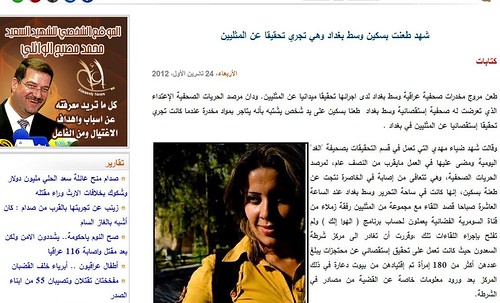
And this was followed by . . .
Well no one.
A journalist was stabbed to death in Baghdad. She was trying to do her job. She was covering researching stories that mattered.
It happened last Monday and most haven't even bothered to note it.
So we're a little confused about Zia Mehdi.
Not that she died, we're not confused about that. She did die.
The Journalistic Freedoms Observatory explained Tuesday she was stabbed to death in Baghdad while working on two stories, the targeting of Iraq's LGBT community and the over-one hundred women arrested for prostitution in Baghdad. The Journalistic Freedoms Observatory is a journalism organization based in Baghdad. There are international journalism organizations. There is, for example, Reporters Without Borders and the Committee to Protect Journalism.
Strangely, a journalist stabbed to death wasn't even a blip on the radar of either Reporters Without Borders or the Committee to Protect Journalism.
And the coverage from the news media? When a journalist is killed, it strikes close to home and many outlets can relate so it's a no-brainer to cover the death. Well the Iraqi news outlet Kitabat reported it on it Wednesday.
And this was followed by . . .
Well no one.
A journalist was stabbed to death in Baghdad. She was trying to do her job. She was covering researching stories that mattered.
It happened last Monday and most haven't even bothered to note it.
TV: On Medical and Critical Malpractice
As the fall season got underway, one show was repeatedly picked as the first to get the axe (for example, here, here, here and here): Fox's Mob Doctor. The hatred for this show is rather surprising since Mob Doctor isn't the worst new show of the fall season -- that 'honor' would go to either CBS's Made In Jersey or NBC's Animal Practice -- both of which have now been cancelled.
Of the still-airing new shows, Emily Owens, M.D. is probably the worst. The CW show could argue that the CW had a real problem with ratings. Except for the fact that Arrow is so far pulling in higher numbers than NBC's The New Normal or Fox's New Girl.
So Emily Owens, M.D. has no excuses. It is the worst of the worst. Because the lead is played by Meryl Streep's daughter, few want to talk about how bad this Grey's Anatomy rip-off is. When they do, they want to pretend that the problem isn't Mamie Gummer. The show sucks. Gummer is in every scene. How do you pretend that she's really good in a bad show when she is the entire show?
Again, were she not Meryl Streep's daughter, the critics would be roasting her.
The Mob Doctor's biggest problem is that it's 'high concept' which, outside of the entertainment industry, translates as tired premise. Actually tired premises.
It sounds like a hard boiled Warner Brothers film of the late forties because that's what it plays like. In fact, it's really just The Damned Don't Cry with Jordana Spiro playing the patsy only now he's a she and a doctor instead of an accountant.
The basics are Dr. Grace Devlin (Jordana Spiro) has a brother Nate (Jesse Lee Soffer) with a huge gambling debt. To save his life, she 'takes over' his debt. She will work it off by being Mob Doctor. For example, if a doctor treats a gunshot wound, they are required to report it . . . unless they are Mob Doctor. In another episode, she runs tests on a diabetic mobster by pushing the bill off on a dead patient leaving audiences to wonder how that will fly under ObamaCare?
The premise is pure kitsch. And the show would probably be receiving higher ratings if it went for camp. Instead, it features writing and acting that is so beyond the cheesy premise. Michael Rapaport is probably giving the finest performance of his career as mobster Moretti that we think has been rubbed out until we find out he staged his death as part of his plan to take down the don. That would be William Forsythe's Constantine Alexander. Forsythe is giving a first rate performance, all surface sheen and sweetness covering a very angry and hateful core.
The cast really is something especially Floriana Lima and Wendy Makkena. The glue holding it all together is Spiro. All the hopes critics wrongly pinned on Mamie Gummer when Emily Owens, M.D. was announced are being met by Spiro.
And, to a degree, it's those early hopes that keep Emily Owens, M.D. from receiving the scorn its earned. Because of the 'pedigree' of the lead, they refuse to believe their own eyes and ears about just how awful this show is. As one endless voice over after another from Gummer steps on lines of other characters, as each camera set up fails at its intent to reassure audiences of how enchanting and Calista Lockhart-like Gummer is, as she apes her mother -- especially with regards to Meryl's line readings in Death Becomes Her, critics keep pretending that this really isn't that bad.
It's worse than bad.
Meryl Streep became a celebrated actress because she was an original. Mamie Gummer was always going to have her mother's looks but that didn't mean she had to copy her mother's acting.
Some will argue that if you're going to copy, copy the best.
Not when you look like her.
When you look like Meryl and you copy Meryl, you just remind everyone that there's only one Meryl.
Kate Hudson and Goldie Hawn have many similarities in looks (and Hudson could look even more like her mother if she wanted to via make up and hair styles). But Hudson earned her own way with her acting. She is not a copy -- pale or brilliant -- of her mother. She is a strong actress in her own right. Jane Fonda looked incredibly like her father Henry but her acting was all her own. Time and again, the daughters of actors that make a career for themselves do it not by aping their parents mannerisms and vocal inflections but by being their own person. For the most extreme example of that, look at Jayne Mansfield who was a delightful screen confection and Mariska Hargitay who has instead gone a grittier, more dramatic route.
If Mamie Gummer were 21, we probably would be softening the above. But she's 29. She's getting too old for movie stardom. (With the exception of Sharon Stone, most film actresses find stardom in their 20s.) She can still go for it. And/or/both TV stardom as well. But for any of that to happen, she's going to have to find what makes her special, what makes her unique.
And at 29, not only should she know that, so should the critics. Instead of voicing that, though, it's so much easier for them to attack something called Mob Doctor. It's a shame Mob Doctor airs on Fox and not on HBO or Showtime. If it aired on one of the cable biggies, people might be noticing its unique look -- this is a show far beyond the standard basic camera set up of TV land. And, on cable, they'd treat the premise as a wink-wink to the audiences and give it cachet. Most of all, they'd be in love with the cast.
If Spiro's made a mistake it's in failing to grasp what Cher did when she was desperate to break into movies. As much as she wanted to be an actress, she knew she'd never be taken seriously in or get praise for something called The Fish That Saved Pittsburgh. Cher 's always understood the limitations of critics.
Of the still-airing new shows, Emily Owens, M.D. is probably the worst. The CW show could argue that the CW had a real problem with ratings. Except for the fact that Arrow is so far pulling in higher numbers than NBC's The New Normal or Fox's New Girl.
So Emily Owens, M.D. has no excuses. It is the worst of the worst. Because the lead is played by Meryl Streep's daughter, few want to talk about how bad this Grey's Anatomy rip-off is. When they do, they want to pretend that the problem isn't Mamie Gummer. The show sucks. Gummer is in every scene. How do you pretend that she's really good in a bad show when she is the entire show?
Again, were she not Meryl Streep's daughter, the critics would be roasting her.
The Mob Doctor's biggest problem is that it's 'high concept' which, outside of the entertainment industry, translates as tired premise. Actually tired premises.
It sounds like a hard boiled Warner Brothers film of the late forties because that's what it plays like. In fact, it's really just The Damned Don't Cry with Jordana Spiro playing the patsy only now he's a she and a doctor instead of an accountant.
The basics are Dr. Grace Devlin (Jordana Spiro) has a brother Nate (Jesse Lee Soffer) with a huge gambling debt. To save his life, she 'takes over' his debt. She will work it off by being Mob Doctor. For example, if a doctor treats a gunshot wound, they are required to report it . . . unless they are Mob Doctor. In another episode, she runs tests on a diabetic mobster by pushing the bill off on a dead patient leaving audiences to wonder how that will fly under ObamaCare?
The premise is pure kitsch. And the show would probably be receiving higher ratings if it went for camp. Instead, it features writing and acting that is so beyond the cheesy premise. Michael Rapaport is probably giving the finest performance of his career as mobster Moretti that we think has been rubbed out until we find out he staged his death as part of his plan to take down the don. That would be William Forsythe's Constantine Alexander. Forsythe is giving a first rate performance, all surface sheen and sweetness covering a very angry and hateful core.
The cast really is something especially Floriana Lima and Wendy Makkena. The glue holding it all together is Spiro. All the hopes critics wrongly pinned on Mamie Gummer when Emily Owens, M.D. was announced are being met by Spiro.
And, to a degree, it's those early hopes that keep Emily Owens, M.D. from receiving the scorn its earned. Because of the 'pedigree' of the lead, they refuse to believe their own eyes and ears about just how awful this show is. As one endless voice over after another from Gummer steps on lines of other characters, as each camera set up fails at its intent to reassure audiences of how enchanting and Calista Lockhart-like Gummer is, as she apes her mother -- especially with regards to Meryl's line readings in Death Becomes Her, critics keep pretending that this really isn't that bad.
It's worse than bad.
Meryl Streep became a celebrated actress because she was an original. Mamie Gummer was always going to have her mother's looks but that didn't mean she had to copy her mother's acting.
Some will argue that if you're going to copy, copy the best.
Not when you look like her.
When you look like Meryl and you copy Meryl, you just remind everyone that there's only one Meryl.
Kate Hudson and Goldie Hawn have many similarities in looks (and Hudson could look even more like her mother if she wanted to via make up and hair styles). But Hudson earned her own way with her acting. She is not a copy -- pale or brilliant -- of her mother. She is a strong actress in her own right. Jane Fonda looked incredibly like her father Henry but her acting was all her own. Time and again, the daughters of actors that make a career for themselves do it not by aping their parents mannerisms and vocal inflections but by being their own person. For the most extreme example of that, look at Jayne Mansfield who was a delightful screen confection and Mariska Hargitay who has instead gone a grittier, more dramatic route.
If Mamie Gummer were 21, we probably would be softening the above. But she's 29. She's getting too old for movie stardom. (With the exception of Sharon Stone, most film actresses find stardom in their 20s.) She can still go for it. And/or/both TV stardom as well. But for any of that to happen, she's going to have to find what makes her special, what makes her unique.
And at 29, not only should she know that, so should the critics. Instead of voicing that, though, it's so much easier for them to attack something called Mob Doctor. It's a shame Mob Doctor airs on Fox and not on HBO or Showtime. If it aired on one of the cable biggies, people might be noticing its unique look -- this is a show far beyond the standard basic camera set up of TV land. And, on cable, they'd treat the premise as a wink-wink to the audiences and give it cachet. Most of all, they'd be in love with the cast.
If Spiro's made a mistake it's in failing to grasp what Cher did when she was desperate to break into movies. As much as she wanted to be an actress, she knew she'd never be taken seriously in or get praise for something called The Fish That Saved Pittsburgh. Cher 's always understood the limitations of critics.
The Man Who Loved Hand Dancing
What the hell was up with Barack Obama during last week's debate?
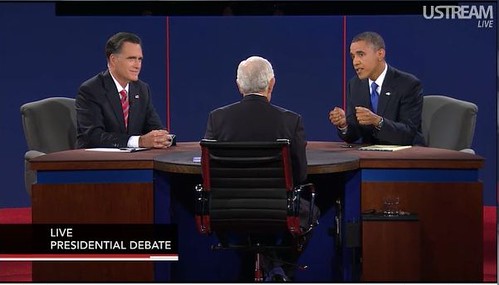
Specifically what was up with the hands?
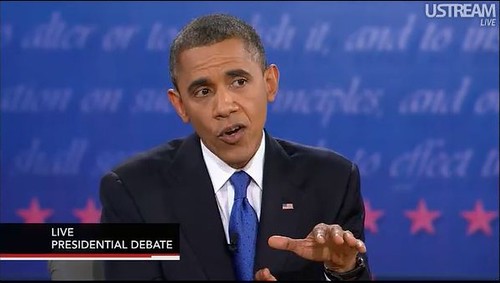
Did he fancy himself a snake charmer?
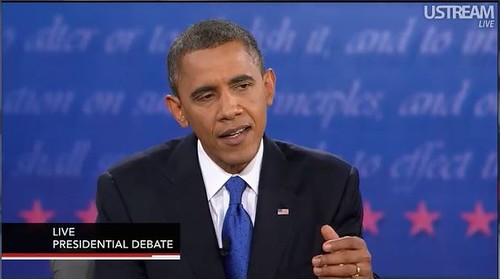
Was he attempting mass hypnosis?
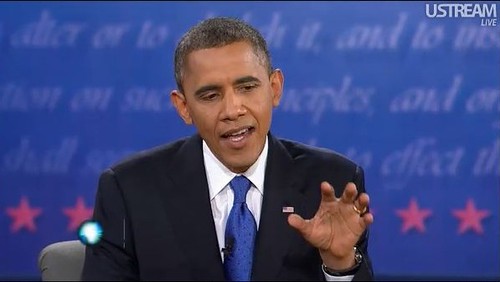
Was he plagued with 'jazz hands'?
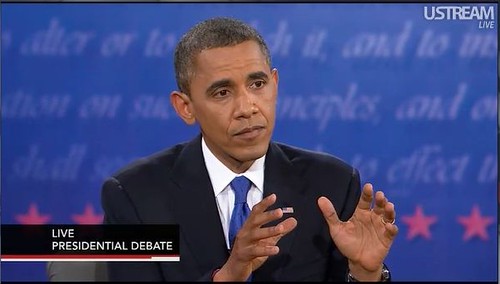
Was he fidgety?
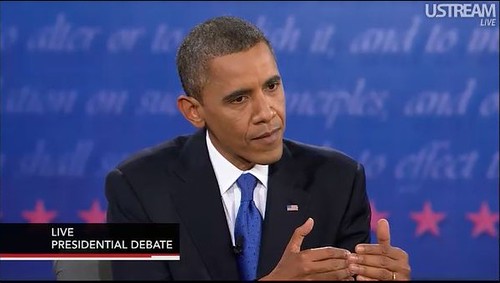
Or was this some choreography?
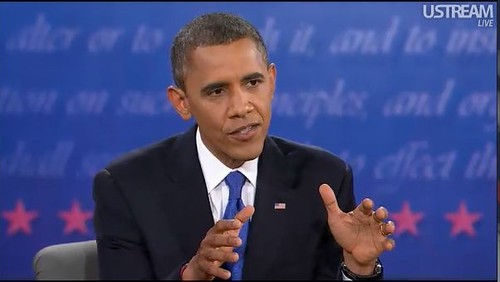
You could build a drinking game out of what he would do next with his hands.
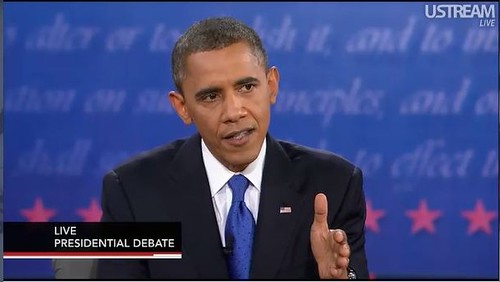
You just couldn't follow his train of thought due to those distracting hands.
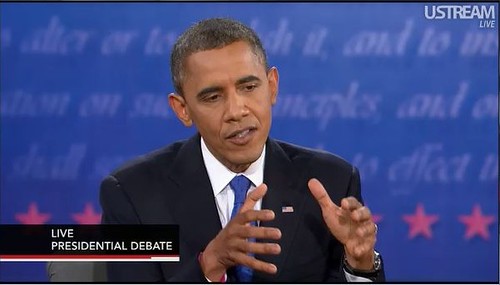
Specifically what was up with the hands?
Did he fancy himself a snake charmer?
Was he attempting mass hypnosis?
Was he plagued with 'jazz hands'?
Was he fidgety?
Or was this some choreography?
You could build a drinking game out of what he would do next with his hands.
You just couldn't follow his train of thought due to those distracting hands.
Roundtable
Jim: The drama, the dullness, the debates, the race, the conflict -- even within our own circke, and Joan Crawford are among the topics in our latest roundtable. press, the race for the presidency, Iraq, Libya and more are the topics for this roundtable. Our
e-mail address is thirdestatesundayreview@yahoo.com. Participating our roundtable are The Third Estate Sunday Review's Dona, Ty, Jess, Ava, and me, Jim; Rebecca of Sex and Politics and Screeds and Attitude; Betty of Thomas Friedman Is a Great Man; C.I. of The Common Ills and The Third Estate Sunday Review; Kat of Kat's Korner (of The Common Ills); Cedric of Cedric's Big Mix; Mike of Mikey Likes It!; Elaine of Like Maria Said Paz); Ruth of Ruth's Report; Trina of Trina's Kitchen; Wally of The Daily Jot; Marcia of SICKOFITRDLZ; Stan of Oh Boy It Never Ends; Isaiah of The World Today Just Nuts and Ann of Ann's Mega Dub.
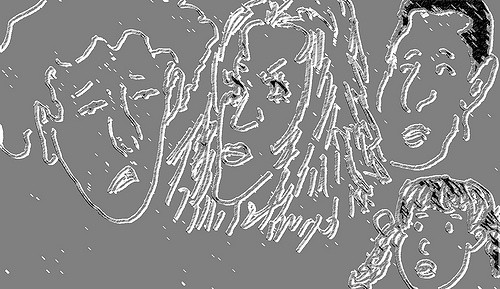
Betty's kids did the
illustration. You are reading a rush transcript.
Jim (Con't): Let's start with the conflict. I was surprised by a remark Trina made to me last week. Let's start there.
Trina: I really thought, "Betty must hate me."
Betty: She even called to ask me, "Do you hate me?"
Jim: What did you tell her?
Betty: Oh, please, I could never hate Trina. But the problem was I hate Jill Stein now.
Trina: And it's actually sort of funny or karmic in that, in 2008, Betty was the first to come out for Hillary. No, that was 2007, wasn't it?
Betty: Yeah.
Trina: And we all got a call from C.I. saying, "Betty's made her choice, be supportive." And I hope we were but I do know how Betty must have felt.
Jim: And that's because what was near universal support for Jill Stein has cratered in the last few weeks.
Dona: As Trina noted Thursday in "It's on Jill Stein."
Jim: Right. Trina notes that she, Dona, Jess, me, Rebecca, Cedric, Ann, Ruth and Kat will vote for Jill Stein. That's a nice chunk, nine people, but it's not what she had this time last month. Wally, you, Stan and Betty are Mitt Romney votes. As in "I'll take Mitt for the block." Now, Wally, unlike most of us, your vote will actually count. Explain why that is?
Wally: I could vote in California but I bought a house in Florida and that's my residency.
Jim: Also where you grew up.
Wally: Right. And Florida's one of the states that are supposed to matter. If I voted in California, my vote really wouldn't matter. Barack will carry California and get all their electoral college votes. It's the same as voting for Barack in, say, Texas. It's a wasted vote. Mitt Romney will carry Texas and get all of Texas' electoral votes.
Kat: The answer is to do away with the electoral college and switch to popular vote for president.
Jim: Right but do you think that will happen?
Kat: In our lifetimes? Nope.
Jim: And that's why people like Wally or people in Ohio or Colorado or other 'swing states' get courted and focused on. Their states are in play and could go either way.
Ruth: A simpler possible change, one that could happen state-by-state, would be for an individual state to vote to change their state from a winner-take-all on the electoral college and to instead award electoral college votes proportionally.
Elaine: Hold on. C.I.'s not going to jump in, so I will. The Electoral College is something everyone present in this roundtable understands because of the 2000 election and key state Florida. But that was 12 years ago and some people are not going to be familiar. The Electoral College votes the January after the November election. They decide who will be president. The Electoral College was created because the Framers feared real democracy. Each state sends X number of officials to vote in the Electoral College. How is X determined? It's the number of US Senators your state has -- all have 2 -- plus the number of House Representatives you have. The lower house is based on population. So a more populated state will have more members in the House of Representatives and more voters in the electoral college. Alaska is not a highly populated state. As a state, it gets two US Senators. But because its population is so small, it only has one person in the US House of Representatives. That means it has 3 votes in the Electoral College. California is the state with the largest population and it has over 50 --
C.I.: 55.
Elaine: Thank you. California has 55 votes in the electoral college. There's also DC but let's not complicate things. So each state sends their number of electors to vote in January. The electors have pledged to vote a certain way but --
Jess: I'll jump in. Almost half the states have laws requiring their voters to the electoral college to vote the way they pledged. These laws have never been tested in terms of Constitutionality. But 24 states do have laws on their books.
Elaine: Thank you, Jess. What Ruth's talking about where votes would be split -- under any kind of plan -- only Maine and Nebraska have that currently. And that's too far in the weeds for an overview. But when we're talking about the electoral college, that's what we're talking about.
Jim: Thank you, Elaine. You are correct, we wrongly started the conversation from the belief that everyone knew we didn't have a popular vote for president. Mike, your mother's voting for Jill, you're not.
Mike: No. I'm not. Ava and C.I. use the right language. She, Jill Stein, didn't earn my vote. I think we need to talk about it that way. For example, in 2000, Ralph Nader earned votes. He did not "steal" votes. My vote's available for anyone who wants to earn it. Her campaign says nothing to my life. She's no longer addressing serious issues like the drones or, heaven forbid, Benghazi. She won't deal with any issue that's going to make Barack look bad.
Jim: Who are you leaning towards?
Mike: Mitt for the block -- like Betty, Wally and Stan are doing -- sounds possible. I'm also looking at Gary Johnson's stands.
Jim: No Jerry White?
Mike: If you live in Louisiana or Wisconsin, where he's on the ballot, or in Michigan where he can be a write-in, I'd say to look at his stands on the issues. But he's not on the ballot in my state.
Jim: Ty, you were strong for Jill. Why the walk away?
Ty: For the same reason that others have walked away from her. The campaign doesn't seem independent, it doesn't seem like she has the strength to take on Barack. She started off strong but the minute Barack tanked in the first debate, Jill stopped calling him out and focused on calling out Romney and Ryan. The minute she could have honestly pulled votes on the left from more than the people who usually support the Green Party, she backed away from it. She refused to even try. So I'm done with her.
Jim: And that is a popular opinion. Not just in this circle of people right now but also in the e-mails to this site?
Ty: There is this huge disappointment in Jill Stein. One reader, Anibal, wrote that no one really wants to do the work required to defeat Barack except for Mitt Romney. She's a 51-year-old Latina who has always voted straight ticket Democrat but she's grabbing Mitt For The Block in November because she will not vote for Barack after what he's done and she will not vote for candidates that she sees as too cowardly to call Barack out for the kill list. There are other issues, but, for her, the kill list was the biggest.
Jim: Anibal lives in what state?
Ty: New Mexico.
Jim: Alright. Ann, you and Jess are the Greens. What do you think?
Ann: I'm voting for Jill. I completely understand why others are not. Betty has written about this at length and I understand why she is so upset with Jill. I should be as well. I don't know, maybe election day, I'll vote Mitt for the block as well.
Jim: Was that groan Cedric?
Cedric: Yes, it was.
Jim: Why are you groaning?
Cedric: I'm voting Jill. I'm a Democrat married to a Green. And I thought this election cycle, we'd share our vote for president. It might be the only time this will ever happen. And now she's taking Mitt for the block.
Ann: I said "maybe." I just do get what Betty's been writing about. It is outrageous. Barack has a kill list and is killing Americans. And where is Jill Stein on this? I mean can she talk about anything other than pot? Granted, part of that is the media. I heard an awful hour of The Diane Rehm Show not that long ago where the guests were David Corn and that Jeneatte Cummings or whatever her name is and another man with Susan Page guest hosting. And the guests all giggled about pot. These are journalists. And the third party candidates get a brief mention -- Gary Johnson and Virgil Good -- and it's giggle, snort, giggle over pot. But Jill controls her campaign website and it has been so weak. I understand Betty's frustration. Mike and Marcia's as well. And certainly Stan, I understand Stan. We're on the phone discussing this several times a week. And I don't disagree with them. There is this, "Oh we finally qualified for matching funds!" And wanting to keep that going. But isn't that the trap Democrats have gotten into? Justifying voting for people who don't earn their vote by citing other reasons? I don't know. I don't know. I will probably decided between Jill and Mitt For The Block based on what I feel when I walk into the voting booth.
Jim: Cedric,, you and Ann are expecting your first child. What do a Democrat and Green produce?
Cedric: A Libertarian. I don't know. Ava's a Democrat, Jess is a Green, they've got a daughter. Just a healthy child, that's all I want. He or she can grow up to be a Republican and they'll still be loved by both parents.
Jim: Trina, when you wrote your post, you did include a link to Isaiah, but you never noted how he was going to vote.
Trina: Really? My bad. Isaiah told me he's not sure who he is voting for.
Isaiah: Barack. I'm voting for Barack.
Jim: Really?
Isaiah: No, I just wanted to shock everyone. I don't know. I was a Jill Stein vote. But she lost me. For the reasons cited. I don't even hear her being a strong voice against ObamaCare despite the fact that she, months ago, would call it out for the corporate give-away that it is. I may go with Mitt For The Block -- I really like that, by the way, comparing it to Hollywood Squares. Who came up with that? Betty?
Betty: No, Ava and C.I. I was talking about how I wanted my vote to mean something and to oppose what has taken place these last four years, with the Drone War, the kill list, Guantanamo still open, etc. And they joked, "You're basically saying, 'I'll take Mitt for the block'." I've been using it ever since and so I am popularizing it. But they came up with it.
Jim: And they have led in calling out the behavior of Barack in the debates. That includes in Tuesday's "The only thing worse than the debate itself (Ava and C.I.)." Suddenly, people are talking about how much Barack cut off Romney during the debate. How tired the jokes the president offered were and more. It was really a snowball effect. I'm tossing that out to Rebecca, Marcia and Stan.
Marcia: And I'm jumping in because I'm being pointed to. Yeah, Barack was so bitchy in the debates, especially the last one. Bitchy is the only word for it and I believe Ava and C.I. were pointing that out after the first debate. But it's as if we were forbidden from using that word and along come Ava and C.I. -- and Cedric and Wally also deserve huge credit -- and suddenly it's a little easier for people to use a nicer form of the word "bitchy" when commenting on Barack's manner in the debates.
Stan: I agree with my cousin. Ava and C.I.'s pieces on the debates were all over my office. There were mornings when I hadn't even read what they'd written and people would be stopping me as I was going to my desk saying, "Oh, they really called it!" Stuff like that. It made a huge impression. And let's also include Isaiah in this because he's also addressed the debates. But, yes, it was like the fable about the one small child saying the emperor has no clothes on and then, finally, everyone else can say it as well instead of pretending not to notice as they'd done for years.
Rebecca: I think Stan nailed it right there. It just takes one person to speak, and others to hear, and suddenly the truth is out. I think this has been a dangerous month -- six weeks actually -- for Barack. Even if he's re-elected, it will not be the smooth ride he got. He has obviously failed on Bengazhi. Both in allowing the lie about YouTube to be repeated over and over and in his handling of the attack itself. At best, he appears to have been out of the loop. At worst, he appears to have refused to order a rescue team in. There is blood in the water and the sharks will circle. The press really is vested in his getting a second term. But Barack would be a fool to think that meant the press was going to go easy on him for four more years.
Jim: I need to follow up with Marcia and Ruth. I wasn't expecting Benghazi to come up in the roundtable. First, Marcia, you wrote 2 weeks ago, calling out the nonsense of the media treating Chris Stevens' mother as the sole person who can decide in this matter. Now we learn Tyrone Woods' father wants answers.
Marcia: Right. Chris Stevens has certainly gotten a great deal of attention. But Glen Doherty, Tyrone Woods and Sean Smith also died in that attack. And their families can have different opinions. As C.I. noted a few weeks back, this was not a private matter, this was not suicide. This was four Americans being killed in an attack because they were Americans. That makes it a public event and that makes it everyone's business.
Jim: Agreed. And the press and the president have presented it as, "Chris Stevens died! Oh, and three other guys." It's very insulting. Ruth?
Ruth: Marcia was hurrying and I will too but Sean Smith's mother had already made clear that she wanted answers. Now Tyrone Woods' father has done the same. I'm very curious to see whether the press will continue to stone wall now? This is a major issue and the American people should not have to wait until after the election to find out what happened. This is nonsense. The White House should have been able to answer as to their response and their information within three days tops. This does not need weeks to figure out where the ball was dropped. It is a stalling tactic with the hopes that it will not effect the election. I think it will.
Jim: Thank you, Ruth, thank you, Marcia. We're over time. But I need to include Joan Crawford. Ava and C.I. have apparently mentioned her numerous times in pieces lately. And a number of readers were wondering if they were making fun of her?
Ava: No. Actually, we've been trading off taking notes to work on a rough draft of a piece we'll be doing this edition that notes Joan Crawford. We like Joan. Anyone who likes Joan will enjoy reading the piece we're going to write. We try to use women in our writing as much as possible. We don't accept the premise that, when writing, you must be 'universal' by referencing men. Why Joan so much in recent weeks? I have no idea. We have been talking about doing a piece on her, the one we're writing for this edition in fact, for about six weeks now. So that may be why the references started popping up more regularly. But you'll find Joan Crawford references in our 2005 writing as well.
Jim: Back to Stan, I know I need to wrap up, but Stan, you're the movie reviewer. Every Friday, you cover movies at your site. This year alone, you've covered Straight Jacket and Sudden Fear. How do you rank Joan of actresses in the first half of the 20th century?
Stan: I'd rank her up to 1960. After that, there are some good moments but not really anything to rave over. But I was really surprised, as I explored her films, just how strong an actress she is. Bette Davis is clearly the best film actress. No one comes close. But I would rank Joan Crawford higher than Katharine Hepburn. Joan's accused of being mannered and one-note by some but I've found that to be the case with Katharine Hepburn much more than Crawford. I also think Crawford aged better. People say she got 'butcher' or 'more masculine' as the years passed. Maybe. But she stayed an adult. Hepburn starts coming off like the 40 and 50 year old virgin whose mind's gone. She's the little girl who can't grow up. Joan had an interesting career and played some interesting roles. I'd say she's one of the top actresses of her era and well ahead of Katharine Hepburn.
Jim: Alright. This has been a rush transcript. Thank you to Dallas for any links in this piece.
Jim (Con't): Let's start with the conflict. I was surprised by a remark Trina made to me last week. Let's start there.
Trina: I really thought, "Betty must hate me."
Betty: She even called to ask me, "Do you hate me?"
Jim: What did you tell her?
Betty: Oh, please, I could never hate Trina. But the problem was I hate Jill Stein now.
Trina: And it's actually sort of funny or karmic in that, in 2008, Betty was the first to come out for Hillary. No, that was 2007, wasn't it?
Betty: Yeah.
Trina: And we all got a call from C.I. saying, "Betty's made her choice, be supportive." And I hope we were but I do know how Betty must have felt.
Jim: And that's because what was near universal support for Jill Stein has cratered in the last few weeks.
Dona: As Trina noted Thursday in "It's on Jill Stein."
Jim: Right. Trina notes that she, Dona, Jess, me, Rebecca, Cedric, Ann, Ruth and Kat will vote for Jill Stein. That's a nice chunk, nine people, but it's not what she had this time last month. Wally, you, Stan and Betty are Mitt Romney votes. As in "I'll take Mitt for the block." Now, Wally, unlike most of us, your vote will actually count. Explain why that is?
Wally: I could vote in California but I bought a house in Florida and that's my residency.
Jim: Also where you grew up.
Wally: Right. And Florida's one of the states that are supposed to matter. If I voted in California, my vote really wouldn't matter. Barack will carry California and get all their electoral college votes. It's the same as voting for Barack in, say, Texas. It's a wasted vote. Mitt Romney will carry Texas and get all of Texas' electoral votes.
Kat: The answer is to do away with the electoral college and switch to popular vote for president.
Jim: Right but do you think that will happen?
Kat: In our lifetimes? Nope.
Jim: And that's why people like Wally or people in Ohio or Colorado or other 'swing states' get courted and focused on. Their states are in play and could go either way.
Ruth: A simpler possible change, one that could happen state-by-state, would be for an individual state to vote to change their state from a winner-take-all on the electoral college and to instead award electoral college votes proportionally.
Elaine: Hold on. C.I.'s not going to jump in, so I will. The Electoral College is something everyone present in this roundtable understands because of the 2000 election and key state Florida. But that was 12 years ago and some people are not going to be familiar. The Electoral College votes the January after the November election. They decide who will be president. The Electoral College was created because the Framers feared real democracy. Each state sends X number of officials to vote in the Electoral College. How is X determined? It's the number of US Senators your state has -- all have 2 -- plus the number of House Representatives you have. The lower house is based on population. So a more populated state will have more members in the House of Representatives and more voters in the electoral college. Alaska is not a highly populated state. As a state, it gets two US Senators. But because its population is so small, it only has one person in the US House of Representatives. That means it has 3 votes in the Electoral College. California is the state with the largest population and it has over 50 --
C.I.: 55.
Elaine: Thank you. California has 55 votes in the electoral college. There's also DC but let's not complicate things. So each state sends their number of electors to vote in January. The electors have pledged to vote a certain way but --
Jess: I'll jump in. Almost half the states have laws requiring their voters to the electoral college to vote the way they pledged. These laws have never been tested in terms of Constitutionality. But 24 states do have laws on their books.
Elaine: Thank you, Jess. What Ruth's talking about where votes would be split -- under any kind of plan -- only Maine and Nebraska have that currently. And that's too far in the weeds for an overview. But when we're talking about the electoral college, that's what we're talking about.
Jim: Thank you, Elaine. You are correct, we wrongly started the conversation from the belief that everyone knew we didn't have a popular vote for president. Mike, your mother's voting for Jill, you're not.
Mike: No. I'm not. Ava and C.I. use the right language. She, Jill Stein, didn't earn my vote. I think we need to talk about it that way. For example, in 2000, Ralph Nader earned votes. He did not "steal" votes. My vote's available for anyone who wants to earn it. Her campaign says nothing to my life. She's no longer addressing serious issues like the drones or, heaven forbid, Benghazi. She won't deal with any issue that's going to make Barack look bad.
Jim: Who are you leaning towards?
Mike: Mitt for the block -- like Betty, Wally and Stan are doing -- sounds possible. I'm also looking at Gary Johnson's stands.
Jim: No Jerry White?
Mike: If you live in Louisiana or Wisconsin, where he's on the ballot, or in Michigan where he can be a write-in, I'd say to look at his stands on the issues. But he's not on the ballot in my state.
Jim: Ty, you were strong for Jill. Why the walk away?
Ty: For the same reason that others have walked away from her. The campaign doesn't seem independent, it doesn't seem like she has the strength to take on Barack. She started off strong but the minute Barack tanked in the first debate, Jill stopped calling him out and focused on calling out Romney and Ryan. The minute she could have honestly pulled votes on the left from more than the people who usually support the Green Party, she backed away from it. She refused to even try. So I'm done with her.
Jim: And that is a popular opinion. Not just in this circle of people right now but also in the e-mails to this site?
Ty: There is this huge disappointment in Jill Stein. One reader, Anibal, wrote that no one really wants to do the work required to defeat Barack except for Mitt Romney. She's a 51-year-old Latina who has always voted straight ticket Democrat but she's grabbing Mitt For The Block in November because she will not vote for Barack after what he's done and she will not vote for candidates that she sees as too cowardly to call Barack out for the kill list. There are other issues, but, for her, the kill list was the biggest.
Jim: Anibal lives in what state?
Ty: New Mexico.
Jim: Alright. Ann, you and Jess are the Greens. What do you think?
Ann: I'm voting for Jill. I completely understand why others are not. Betty has written about this at length and I understand why she is so upset with Jill. I should be as well. I don't know, maybe election day, I'll vote Mitt for the block as well.
Jim: Was that groan Cedric?
Cedric: Yes, it was.
Jim: Why are you groaning?
Cedric: I'm voting Jill. I'm a Democrat married to a Green. And I thought this election cycle, we'd share our vote for president. It might be the only time this will ever happen. And now she's taking Mitt for the block.
Ann: I said "maybe." I just do get what Betty's been writing about. It is outrageous. Barack has a kill list and is killing Americans. And where is Jill Stein on this? I mean can she talk about anything other than pot? Granted, part of that is the media. I heard an awful hour of The Diane Rehm Show not that long ago where the guests were David Corn and that Jeneatte Cummings or whatever her name is and another man with Susan Page guest hosting. And the guests all giggled about pot. These are journalists. And the third party candidates get a brief mention -- Gary Johnson and Virgil Good -- and it's giggle, snort, giggle over pot. But Jill controls her campaign website and it has been so weak. I understand Betty's frustration. Mike and Marcia's as well. And certainly Stan, I understand Stan. We're on the phone discussing this several times a week. And I don't disagree with them. There is this, "Oh we finally qualified for matching funds!" And wanting to keep that going. But isn't that the trap Democrats have gotten into? Justifying voting for people who don't earn their vote by citing other reasons? I don't know. I don't know. I will probably decided between Jill and Mitt For The Block based on what I feel when I walk into the voting booth.
Jim: Cedric,, you and Ann are expecting your first child. What do a Democrat and Green produce?
Cedric: A Libertarian. I don't know. Ava's a Democrat, Jess is a Green, they've got a daughter. Just a healthy child, that's all I want. He or she can grow up to be a Republican and they'll still be loved by both parents.
Jim: Trina, when you wrote your post, you did include a link to Isaiah, but you never noted how he was going to vote.
Trina: Really? My bad. Isaiah told me he's not sure who he is voting for.
Isaiah: Barack. I'm voting for Barack.
Jim: Really?
Isaiah: No, I just wanted to shock everyone. I don't know. I was a Jill Stein vote. But she lost me. For the reasons cited. I don't even hear her being a strong voice against ObamaCare despite the fact that she, months ago, would call it out for the corporate give-away that it is. I may go with Mitt For The Block -- I really like that, by the way, comparing it to Hollywood Squares. Who came up with that? Betty?
Betty: No, Ava and C.I. I was talking about how I wanted my vote to mean something and to oppose what has taken place these last four years, with the Drone War, the kill list, Guantanamo still open, etc. And they joked, "You're basically saying, 'I'll take Mitt for the block'." I've been using it ever since and so I am popularizing it. But they came up with it.
Jim: And they have led in calling out the behavior of Barack in the debates. That includes in Tuesday's "The only thing worse than the debate itself (Ava and C.I.)." Suddenly, people are talking about how much Barack cut off Romney during the debate. How tired the jokes the president offered were and more. It was really a snowball effect. I'm tossing that out to Rebecca, Marcia and Stan.
Marcia: And I'm jumping in because I'm being pointed to. Yeah, Barack was so bitchy in the debates, especially the last one. Bitchy is the only word for it and I believe Ava and C.I. were pointing that out after the first debate. But it's as if we were forbidden from using that word and along come Ava and C.I. -- and Cedric and Wally also deserve huge credit -- and suddenly it's a little easier for people to use a nicer form of the word "bitchy" when commenting on Barack's manner in the debates.
Stan: I agree with my cousin. Ava and C.I.'s pieces on the debates were all over my office. There were mornings when I hadn't even read what they'd written and people would be stopping me as I was going to my desk saying, "Oh, they really called it!" Stuff like that. It made a huge impression. And let's also include Isaiah in this because he's also addressed the debates. But, yes, it was like the fable about the one small child saying the emperor has no clothes on and then, finally, everyone else can say it as well instead of pretending not to notice as they'd done for years.
Rebecca: I think Stan nailed it right there. It just takes one person to speak, and others to hear, and suddenly the truth is out. I think this has been a dangerous month -- six weeks actually -- for Barack. Even if he's re-elected, it will not be the smooth ride he got. He has obviously failed on Bengazhi. Both in allowing the lie about YouTube to be repeated over and over and in his handling of the attack itself. At best, he appears to have been out of the loop. At worst, he appears to have refused to order a rescue team in. There is blood in the water and the sharks will circle. The press really is vested in his getting a second term. But Barack would be a fool to think that meant the press was going to go easy on him for four more years.
Jim: I need to follow up with Marcia and Ruth. I wasn't expecting Benghazi to come up in the roundtable. First, Marcia, you wrote 2 weeks ago, calling out the nonsense of the media treating Chris Stevens' mother as the sole person who can decide in this matter. Now we learn Tyrone Woods' father wants answers.
Marcia: Right. Chris Stevens has certainly gotten a great deal of attention. But Glen Doherty, Tyrone Woods and Sean Smith also died in that attack. And their families can have different opinions. As C.I. noted a few weeks back, this was not a private matter, this was not suicide. This was four Americans being killed in an attack because they were Americans. That makes it a public event and that makes it everyone's business.
Jim: Agreed. And the press and the president have presented it as, "Chris Stevens died! Oh, and three other guys." It's very insulting. Ruth?
Ruth: Marcia was hurrying and I will too but Sean Smith's mother had already made clear that she wanted answers. Now Tyrone Woods' father has done the same. I'm very curious to see whether the press will continue to stone wall now? This is a major issue and the American people should not have to wait until after the election to find out what happened. This is nonsense. The White House should have been able to answer as to their response and their information within three days tops. This does not need weeks to figure out where the ball was dropped. It is a stalling tactic with the hopes that it will not effect the election. I think it will.
Jim: Thank you, Ruth, thank you, Marcia. We're over time. But I need to include Joan Crawford. Ava and C.I. have apparently mentioned her numerous times in pieces lately. And a number of readers were wondering if they were making fun of her?
Ava: No. Actually, we've been trading off taking notes to work on a rough draft of a piece we'll be doing this edition that notes Joan Crawford. We like Joan. Anyone who likes Joan will enjoy reading the piece we're going to write. We try to use women in our writing as much as possible. We don't accept the premise that, when writing, you must be 'universal' by referencing men. Why Joan so much in recent weeks? I have no idea. We have been talking about doing a piece on her, the one we're writing for this edition in fact, for about six weeks now. So that may be why the references started popping up more regularly. But you'll find Joan Crawford references in our 2005 writing as well.
Jim: Back to Stan, I know I need to wrap up, but Stan, you're the movie reviewer. Every Friday, you cover movies at your site. This year alone, you've covered Straight Jacket and Sudden Fear. How do you rank Joan of actresses in the first half of the 20th century?
Stan: I'd rank her up to 1960. After that, there are some good moments but not really anything to rave over. But I was really surprised, as I explored her films, just how strong an actress she is. Bette Davis is clearly the best film actress. No one comes close. But I would rank Joan Crawford higher than Katharine Hepburn. Joan's accused of being mannered and one-note by some but I've found that to be the case with Katharine Hepburn much more than Crawford. I also think Crawford aged better. People say she got 'butcher' or 'more masculine' as the years passed. Maybe. But she stayed an adult. Hepburn starts coming off like the 40 and 50 year old virgin whose mind's gone. She's the little girl who can't grow up. Joan had an interesting career and played some interesting roles. I'd say she's one of the top actresses of her era and well ahead of Katharine Hepburn.
Jim: Alright. This has been a rush transcript. Thank you to Dallas for any links in this piece.
Before Bette versus Joan, there was Mary (Ava and C.I.)
Back in September, Betty wrote about a book she'd enjoyed, Eileen Whitfield's Pickford: The Woman Who Made Hollywood. We had a few questions based on Betty's summary of the book. We shrugged and thought nothing more of it after discussing it with Betty. Then, a few weeks ago, we caught Mary Pickford: American Experience being re-run on a PBS station. The same misinformation as in Whitfield's book.
We started to wonder: How can you tell the story of the downfall of Mary Pickford and not include the cause?
Mary Pickford was one of the first stars of film. Starting in 1913, her popularity became noticeable leading to her requesting pay worthy of the audience she was pulling in and for her name to be above the title starting with 1914's Hearts Adrift. Tess of the Storm Country would cement her film stardom (the original, she remade the 1914 film eight years later). She was 22 in 1914 but popular for playing little girl roles. She would continue playing these roles: The Poor Little Rich Girl, Rebecca of Sunnybrook Farm and The Little Princess in 1917; Daddy-Long-Legs in 1919; Pollyanna in 1920 . . .
They were hits along with many more. In 1921, she played the lead role in Little Lord Fauntelroy and also the boy's mother -- she was 29-years-old. At 33, she was playing a young orphan in Little Annie Rooney.
This created a problem Pickford was aware of. She needed to be playing more mature roles. Though she had a huge fan base for these little girl roles, she also faced growing barbs and resistance. This usually gets left out of the books and the documentaries -- as if 1920 wits weren't going to take a crack at a grown woman playing 12-year-olds?
Along with needing to find a new screen persona, she needed to face a major change in the industry. Mary Pickford was the star of silent films. As the success of 1927's The Jazz Singer made clear, 'talking pictures' were where the industry was going.
Mary Pickford made Coquette, her first talking film, in 1929. It was her only sound picture to do well at the box office. She played a young woman and she cut off the children's curls. Her fame meant that people would buy tickets to hear her speak onscreen -- especially since many of the silent stars were stalling on doing their first talkie. It's a shame she chose to play the nothing role. She did win the Academy Award for Best Actress but it's not a film that's lasted and it's a performance that wasn't well received by critics in real time.
Coquette helped bury her. She'd never have another successful film. And you can find most of the above in any book on Pickford. But why was 1929 so important to Pickford? Why was she being seen as a witch and worse for the first time in her career before Coquette even came out?
What's that?
The books and documentaries don't tell you she was seen as a witch?
Ladies and gentlemen, the one who slayed Mary Pickford.
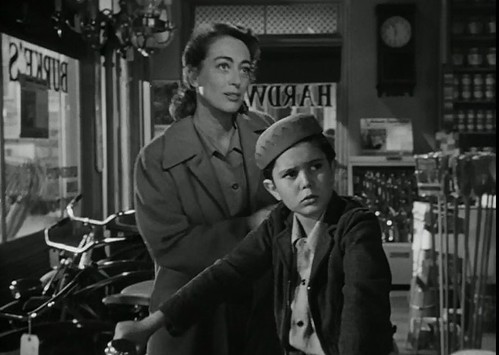
That's Joan Crawford, the ultimate film star. She'd been a celebrity for movie roles and press coverage and then, in 1928, the silent film Our Dancing Daughters made her a star.
Joan was fresh and of the period, a jazz baby, while Mary Pickford was causing giggles as she continued playing children onscreen -- even after she'd left her first husband to marry Douglas Fairbanks and set up house on the Pickfair estate.
It was Douglas Fairbanks Jr. that Joan would first encounter in 1928, a romance would develop much to the delight of the movie magazines. But as Motion Picture, Photoplay and numerous other magazines -- as well as many papers -- made clear, there was a problem in the romance: Doug Jr.'s step-mother did not approve of Joan Crawford.
Mary Pickford was "Little Mary" to her fans. The proletariat poster gal, on the side of the worker, playing working class roles (when she pulled in audiences). And here she was snubbing Joan Crawford who was on the cusp of her first bout of movie star fame, the shop-girl roles she played at MGM? Joan Crawford, in those roles, epitomized the working class and the notion that there could be upward mobility in the United States.
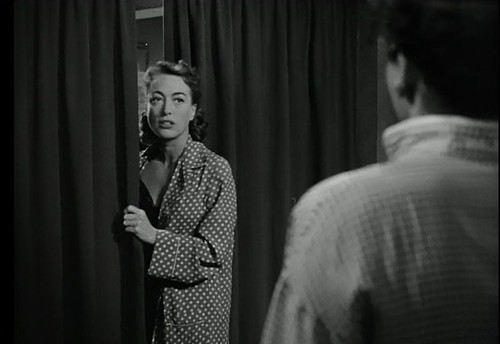
And here was "Little Mary" saying Joan wasn't good enough? Not just for her step-son, but also not good enough to be invited to a party at Pickfair -- the parties that included hundreds of guests but Joan wasn't good enough?
Their engagement didn't result in Joan being invited to a fancy dinner or party. After they eloped in New York City, with the movie magazines beating up on "Little Mary," Joan was finally invited to Pickfair. It was a change from more recent Mary Pickford's coverage when she was being written of as a has-been in search of a new direction. Now she was the bitch who refused to allow America's newest star Joan Crawford into her home.
In this climate, "Little Mary" had cut off her mop of curls and had decided to stop playing the little girls that made her famous. Coquette benefited from the publicity that had been generated for nearly a year as Joan and Doug Jr. had begun their romance. Otherwise, it most likely would have have failed at the box office (in real time, the critics were correct, it was a lousy movie).
And that was that for Mary Pickford. She went on the big screen without the curls, not playing a little girl, after nearly a year of bad press for her treatment of Joan Crawford. Audiences looked at the screen and saw a so-so actress who didn't epitomize anything they'd embraced in "Little Mary" and that was the end of Mary Pickford's career.
Joan slayed her and her own ego brought her down. Mary Pickford who tried to pretend to be the most interested in her many fans would ignore the fans outrage over the way she was treating Crawford.
It's a mistake Joan never made. If she felt she was disappointing her fans, she'd drop a questionable boyfriend or, near the end, refuse to be photographed by the press. Mary Pickford was America's first film star, PBS told us in their documentary, and America's first has-been.
They got the second part right.
By contrast, Joan Crawford never had that problem. When the public lost interest in her shop-girl roles she was dropped by MGM. Were she Mary Pickford, that would have been the end of that. But she was Joan Crawford. So she'd go on to even bigger success at Warner Brothers -- including winning the Academy Award for Mildred Pierce.

Unlike Mary Pickford, Joan Crawford was built for stardom and that's why she was a star of the silent films in the 20s, a star of the new 'talkies' in the 30s, a star in the 40s, a star in the 50s and a star in the 60s. For five decades, she was a film star. That meant changing with evolving tastes. No frozen little girl roles for her.
Mary Pickford was a star of silent films. She was said to be a very smart business person. But where the smarts mattered, in preserving the career she wanted to carry on, she didn't have them. She engaged in a year long public feud with Joan Crawford, angering her own fans as well as other people who might have purchased tickets to her films had she not been seen as a snobbish bitch as the Great Depression was starting. To talk about how fans walked away from Mary Pickford and not include Joan Crawford in the story is to fail to tell the true story of what happened.
---------------
All screen snaps from 1950's The Damned Don't Cry starring Joan Crawford, directed by Vincent Sherman, story by Gertrude Walker, screenplay by Harold Medford and Jerome Weidman, produced by Jerry Wald and also featuring David Brian, Steve Cochran, Richard Egan, Kent Smith and Selena Royle.
We started to wonder: How can you tell the story of the downfall of Mary Pickford and not include the cause?
Mary Pickford was one of the first stars of film. Starting in 1913, her popularity became noticeable leading to her requesting pay worthy of the audience she was pulling in and for her name to be above the title starting with 1914's Hearts Adrift. Tess of the Storm Country would cement her film stardom (the original, she remade the 1914 film eight years later). She was 22 in 1914 but popular for playing little girl roles. She would continue playing these roles: The Poor Little Rich Girl, Rebecca of Sunnybrook Farm and The Little Princess in 1917; Daddy-Long-Legs in 1919; Pollyanna in 1920 . . .
They were hits along with many more. In 1921, she played the lead role in Little Lord Fauntelroy and also the boy's mother -- she was 29-years-old. At 33, she was playing a young orphan in Little Annie Rooney.
This created a problem Pickford was aware of. She needed to be playing more mature roles. Though she had a huge fan base for these little girl roles, she also faced growing barbs and resistance. This usually gets left out of the books and the documentaries -- as if 1920 wits weren't going to take a crack at a grown woman playing 12-year-olds?
Along with needing to find a new screen persona, she needed to face a major change in the industry. Mary Pickford was the star of silent films. As the success of 1927's The Jazz Singer made clear, 'talking pictures' were where the industry was going.
Mary Pickford made Coquette, her first talking film, in 1929. It was her only sound picture to do well at the box office. She played a young woman and she cut off the children's curls. Her fame meant that people would buy tickets to hear her speak onscreen -- especially since many of the silent stars were stalling on doing their first talkie. It's a shame she chose to play the nothing role. She did win the Academy Award for Best Actress but it's not a film that's lasted and it's a performance that wasn't well received by critics in real time.
Coquette helped bury her. She'd never have another successful film. And you can find most of the above in any book on Pickford. But why was 1929 so important to Pickford? Why was she being seen as a witch and worse for the first time in her career before Coquette even came out?
What's that?
The books and documentaries don't tell you she was seen as a witch?
Ladies and gentlemen, the one who slayed Mary Pickford.
That's Joan Crawford, the ultimate film star. She'd been a celebrity for movie roles and press coverage and then, in 1928, the silent film Our Dancing Daughters made her a star.
Joan was fresh and of the period, a jazz baby, while Mary Pickford was causing giggles as she continued playing children onscreen -- even after she'd left her first husband to marry Douglas Fairbanks and set up house on the Pickfair estate.
It was Douglas Fairbanks Jr. that Joan would first encounter in 1928, a romance would develop much to the delight of the movie magazines. But as Motion Picture, Photoplay and numerous other magazines -- as well as many papers -- made clear, there was a problem in the romance: Doug Jr.'s step-mother did not approve of Joan Crawford.
Mary Pickford was "Little Mary" to her fans. The proletariat poster gal, on the side of the worker, playing working class roles (when she pulled in audiences). And here she was snubbing Joan Crawford who was on the cusp of her first bout of movie star fame, the shop-girl roles she played at MGM? Joan Crawford, in those roles, epitomized the working class and the notion that there could be upward mobility in the United States.
And here was "Little Mary" saying Joan wasn't good enough? Not just for her step-son, but also not good enough to be invited to a party at Pickfair -- the parties that included hundreds of guests but Joan wasn't good enough?
Their engagement didn't result in Joan being invited to a fancy dinner or party. After they eloped in New York City, with the movie magazines beating up on "Little Mary," Joan was finally invited to Pickfair. It was a change from more recent Mary Pickford's coverage when she was being written of as a has-been in search of a new direction. Now she was the bitch who refused to allow America's newest star Joan Crawford into her home.
In this climate, "Little Mary" had cut off her mop of curls and had decided to stop playing the little girls that made her famous. Coquette benefited from the publicity that had been generated for nearly a year as Joan and Doug Jr. had begun their romance. Otherwise, it most likely would have have failed at the box office (in real time, the critics were correct, it was a lousy movie).
And that was that for Mary Pickford. She went on the big screen without the curls, not playing a little girl, after nearly a year of bad press for her treatment of Joan Crawford. Audiences looked at the screen and saw a so-so actress who didn't epitomize anything they'd embraced in "Little Mary" and that was the end of Mary Pickford's career.
Joan slayed her and her own ego brought her down. Mary Pickford who tried to pretend to be the most interested in her many fans would ignore the fans outrage over the way she was treating Crawford.
It's a mistake Joan never made. If she felt she was disappointing her fans, she'd drop a questionable boyfriend or, near the end, refuse to be photographed by the press. Mary Pickford was America's first film star, PBS told us in their documentary, and America's first has-been.
They got the second part right.
By contrast, Joan Crawford never had that problem. When the public lost interest in her shop-girl roles she was dropped by MGM. Were she Mary Pickford, that would have been the end of that. But she was Joan Crawford. So she'd go on to even bigger success at Warner Brothers -- including winning the Academy Award for Mildred Pierce.
Unlike Mary Pickford, Joan Crawford was built for stardom and that's why she was a star of the silent films in the 20s, a star of the new 'talkies' in the 30s, a star in the 40s, a star in the 50s and a star in the 60s. For five decades, she was a film star. That meant changing with evolving tastes. No frozen little girl roles for her.
Mary Pickford was a star of silent films. She was said to be a very smart business person. But where the smarts mattered, in preserving the career she wanted to carry on, she didn't have them. She engaged in a year long public feud with Joan Crawford, angering her own fans as well as other people who might have purchased tickets to her films had she not been seen as a snobbish bitch as the Great Depression was starting. To talk about how fans walked away from Mary Pickford and not include Joan Crawford in the story is to fail to tell the true story of what happened.
---------------
All screen snaps from 1950's The Damned Don't Cry starring Joan Crawford, directed by Vincent Sherman, story by Gertrude Walker, screenplay by Harold Medford and Jerome Weidman, produced by Jerry Wald and also featuring David Brian, Steve Cochran, Richard Egan, Kent Smith and Selena Royle.
Subscribe to:
Posts (Atom)
