In a new letter,
Senator Murray urged Trump-Pence Administration to withdraw rule
allowing for federal contractors and subcontractors to discriminate on
ideological grounds
Senator Murray: “The government
cannot use religious exemptions as a pretext to permit discrimination
against or harm others, and we demand the Department immediately
withdraw this proposed rule and cease any action that could subject
workers and job applicants to discrimination and harassment”
(Washington, D.C.) – Monday,
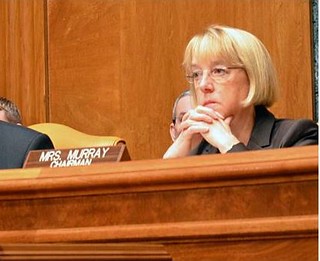
U.S. Senator Patty Murray (D-WA), the top Democrat on the Senate labor committee, sent a
letter
to Acting Secretary of Labor, Patrick Pizzella, urging the Department
of Labor to withdraw a proposed rule that would allow federal
contractors and subcontractors in Washington state and across the
country to justify discrimination against women, LGBTQ people, and
members of certain religious groups on ideological grounds.
“This proposed rule could allow taxpayer-funded employment
discrimination against LGBTQ people, women, and members of certain
religious groups. The government cannot use religious exemptions as a
pretext to permit discrimination against or harm others, and we demand
the Department immediately withdraw this proposed rule and cease any
action that could subject workers and job applicants to discrimination
and harassment,” wrote Senator Murray.
Full text of the letter is below and the PDF is HERE.
September 16, 2019
The Honorable Patrick Pizzella
Acting Secretary of Labor
U.S. Department of Labor
200 Constitution Ave, NW
Washington, DC 20210
Dear Acting Secretary Pizzella:
We write to oppose the Department of Labor’s (the Department) Office
of Federal Contract Compliance Programs (OFCCP) proposed regulation,
“Implementing Legal Requirements
Regarding the Equal Opportunity Clause’s Religious Exemption,” which was published in the Federal Register on August 15, 2019.
[1]
The proposed rule seeks to limit the scope of Executive Order (EO)
11246 – an executive order prohibiting federal contractors and
subcontractors from discriminating “against any employee or applicant
for employment because of race, color, religion, sex, or national
origin” – by dramatically expanding the religious exemption from EO
11246’s requirements.
[2]
This proposed rule could allow taxpayer-funded employment
discrimination against LGBTQ people, women, and members of certain
religious groups. The government cannot use religious exemptions as a
pretext to permit discrimination against or harm others, and we demand
the Department immediately withdraw this proposed rule and cease any
action that could subject workers and job applicants to discrimination
and harassment.
- The Proposed Rule Could Negatively Impact Federal Contract Workers Who Are LGBTQ, Women, and Members of Certain Religious Groups
The proposed rule could undermine critical protections for women,
individuals from certain religious groups, and LGBTQ employees working
for federal contractors. The proposed rule could be particularly
destructive given that meaningful employment and safe working conditions
have a significant impact on the quality of a worker’s life. We
strongly oppose any steps that encourage or fail to prevent
discrimination and harassment in hiring and during the job, which are
already significant barriers that often keep workers from finding
meaningful employment.
This proposed rule will exacerbate ongoing forms of discrimination
and harassment against the LGBTQ community. In a 2017 nationally
representative survey reporting harassment and violence in the LGBTQ
community, 20 percent of LGBTQ individuals said they were personally
discriminated against when applying for jobs.
[3]
In the same survey, nearly 60 percent of LGBTQ people agreed with the
statement, “LGBTQ people where I live have fewer employment
opportunities.”
[4]
In a March 2018 report on LGBTQ poverty and economic justice, between
15 percent and 43 percent of LGBTQ workers reported having experienced
discrimination on the job.
[5]
In the 2015 U.S. Transgender Survey, 30 percent of survey respondents
who had a job the previous year reported being fired, were denied a
promotion, or experienced some form of mistreatment.
[6]
Nearly one-quarter of survey respondents reported other forms of
mistreatment based on their gender identity or expression, including
having private information about their gender identity shared or being
told by their employer to present as the wrong gender to keep their job.
[7] Seventy-seven percent of respondents hid their gender or quit their jobs to avoid mistreatment in their workplace.
[8]
Other transgender workers commented on how their coworkers felt they
had the right to disrespect them because the employers set the tone.
[9]
And for LGBTQ workers living in a jurisdiction without explicit
statutory protections, the changes from the proposed rule will be even
more harmful.
The proposed rule will make it easier for employers to discriminate
against women and pregnant workers. Women already face significant
discrimination in the workplace, and this rule would only further
embolden discrimination. Women report substantially higher rates of
sexual harassment in the workplace than men. In a 2017 survey, 27
percent of women reported being victims of sexual harassment in the
workplace, compared with only 10 percent of men.
[10] A 2018 survey found 38 percent of women reported sexual harassment at their workplace, compared with 13 percent of men.
[11]
Women file the majority of workplace harassment and sexual harassment
charges with the Equal Employment Opportunity Commission (EEOC).
[12]
Additionally, women face discrimination in the workplace based on
their reproductive health decisions. For example, pregnancy
discrimination cases filed with the EEOC have risen substantially over
recent decades.
[13]
A 2014 survey estimated that nearly a quarter million women are denied
requests for accommodations related to pregnancy each year.
[14]
Some employers have threatened to fire their employees for using
contraception, and some have fired their workers for being unmarried and
pregnant
[15] or for having an abortion.
[16]
Expanding religious exemptions would only erode existing protections
for women and embolden employers to discriminate against and harass
women and pregnant workers.
The rule will also embolden discrimination based on gender-based
stereotypes. Employers have refused to hire women based on a religious
belief that women, or mothers, should not work outside of the home.
[17]
Women workers also have been discriminated against in terms of pay and
benefits and working conditions because of religious beliefs about the
appropriate role of women in society. For example, a religious school
denied women health insurance by providing it only to the “head of
household,” defined to be married men and single persons, based on its
belief that a woman cannot be the “head of household.”
[18]
The proposed rule could also allow federal contractors to further
discriminate against someone if they do not share the same religious
beliefs of the employer. Expanding the religious exemption could allow
employers to refuse to interview anyone—no matter their
qualifications—if they do not regularly attend religious services in the
faith belonging to the employer.
[19]
This could create a situation where religious employers are
discriminating against their workers who practice their faith
differently—a fundamental right guaranteed by the Constitution.
Yet, instead of recognizing these challenges and preventing or
addressing them, the Department is instead proposing to expand
opportunities for federal contractors to discriminate against or harass
workers while using federal dollars to do so. By allowing federal
contractors to use their religious beliefs to justify discrimination
against LGBTQ people, women, and workers from various religions, the
Department is exacerbating the challenges many individuals already face
in being hired for and retaining employment.
- The Proposed Rule Could Apply the Religious Exemption to Any
Entity Generally Holding Itself Out to the Public As Carrying Out a
Religious Mission
The proposed rule seeks to inappropriately expand the types of
organizations and employers that can qualify for a religious exemption.
In determining what constitutes a religious organization, the proposal
adopts the test proposed by a concurring judge—not the opinion of the
full Ninth Circuit panel—in
Spencer v. World Vision, Inc., but then broadens it even further and eliminates key limits. The rule’s proposed modified version of the Ninth Circuit’s
World Vision test
selectively adopts certain elements of the test and then abandons other
elements in order to drastically expand the type of organizations that
can qualify for a religious exemption.
Cherry-picking and modifying a court test to expand what constitutes a
religious organization fundamentally mischaracterizes and obscures
applicable law. In
World Vision, former employees brought an
action against World Vision, a Christian humanitarian organization,
alleging the employees were terminated on the basis of their religious
beliefs. In the
per curiam opinion of
World Vision, the
Ninth Circuit held the test of whether an entity is eligible for an
exemption will determine whether the entity “is organized for a
religious purpose, is engaged primarily in carrying out that religious
purpose, holds itself out to the public as an entity for carrying out
that religious purpose, and does not engage primarily or substantially
in the exchange of goods or services for money beyond nominal amounts.”
[20] The proposed rule drops the requirement from the test in the
World Vision per curiam decision that an entity be “engaged primarily in carrying out” the religious purpose for which it was organized.
[21]
Then it replaces this prong with a portion of the test from the
concurring opinion that the entity “[engage] in activity consistent
with, and in furtherance of, those religious purposes.”
[22] This prong is further diluted with the adoption of an extremely broad definition of the term “engage in religious exercise.”
The proposed rule also drops the requirement from the
World Vision per curiam decision
that an entity “not engage primarily or substantially in the exchange
of goods or services for money beyond nominal amounts.”
[23]
Instead, the proposed rule explicitly permits for-profit organizations
to qualify for the exemption. Even the concurring opinion, which the
proposed rule relies upon heavily, states that “looking at how an
institution charges offers an objective test for sorting out which
institutions are designed to exchange goods or services for money” and
that “this objective measure relates closely to the purpose of the
exemption.”
[24]
If money is available as an incentive for the employer, then it is
strong evidence that the exercise of religion is not the objective of
the entity. Excluding this part of the test would allow for-profit
corporations to be deemed religious organizations entitled to religious
exemptions for employment purposes. This clearly contradicts the plain
language articulated in
World Vision and constitutes an expansion of religious exemptions beyond what the Ninth Circuit addressed.
- The Proposed Rule Misinterprets Supreme Court Decisions on
Religious Exercise and Privileges the Interests of Religious Federal
Contractors Over Members of Protected Classes
The proposed rule falsely claims that the Supreme Court decisions in
Trinity Lutheran Church of Columbia, Inc. v. Comer,
Masterpiece Cakeshop, Ltd. V. Colorado Civil Rights Commission, and
Burwell v. Hobby Lobby Stores, Inc.
require a much broader religious exemption from equal employment
protections than what is contemplated by the text of the Executive
Order. These cases were narrowly decided and are distinguishable from
circumstances surrounding religious exemptions and federally-funded
contractors and subcontractors. The proposed rule could allow OFCCP to
expand the holdings of these cases in a way that could substantially
broaden the scope of religious exemptions for federal contractors.
The Court has long held federally-funded employers cannot use
religion to discriminate. Each of the cases cited in the proposed rule
are consistent with that approach. In
Trinity Lutheran, there was
no question as to whether the entity was a church, nor did the Court
address on what basis a church—or any government funded entity for that
matter—can discriminate against its employees.
[25] In
Masterpiece Cakeshop, the
Court held that “while those religious and philosophical objections are
protected, it is a general rule that such objections do not allow
business owners and other actors in the economy and in society to deny
protected persons equal access to goods and services under a neutral and
generally applicable public accommodations law.”
[26] Hobby Lobby
was related to whether the government could require a closely held,
for-profit employer to cover birth control in a health insurance plan
for purposes of the Religious Freedom Restoration Act; the Court was
interpreting the word “person”—not any of the words being defined in the
proposed rule—and expressly recognized that its decision provided “no
shield,” even for for-profit entities and corporations, to discriminate
“cloaked as religious practice.”
[27]
Broadly referring to religious freedom and exemption principles from
Trinity Lutheran,
Masterpiece, and
Hobby Lobby,
this proposed rule could adopt an unreasonably expansive view of
religious exemptions. These cases do not allow the federal government to
permit federal contractors to apply a religious litmus test on its
employees, and they do not justify a religious exemption that denies
employees equal access to taxpayer-funded jobs. Yet the proposed rule
could allow—for example—contractors to assert the exemption to deny
employment or health benefits on the basis of sexual orientation, deny
employment to transgender employees, and refuse employment to anyone who
did not regularly attend religious services or participate in the
“right” religion. The proposed rule misconstrues the narrow reasoning
outlined in
Trinity Lutheran,
Masterpiece, and
Hobby Lobby, all of which is completely inapplicable to the permissible scope of the exemption.
- The Proposed Rule Could Allow Entities to Condition Employment on Discriminatory Criteria
The proposed rule could allow contractors and subcontractors to
condition employment and job benefits on an employee’s adherence to
certain religious tenets.
[28]
Under section 204(c) of EO 11246, the contractor agreement does “not
apply to a Government contractor or subcontractor that is a religious
corporation, association, educational institution, or society, with
respect to the employment of individuals of a particular religion . . . .
“
[29]
Prior statements of OFCCP and the EEOC have adhered to the dominant
interpretation that this exemption is narrow in scope and permits
religious organizations in employment to limit or prefer individuals of
the faith only when making hiring decisions.
[30]
Yet, this proposed rule expands that position by allowing an employer
to discriminate against employees on other bases beyond religion.
Permitting employers to justify sex discrimination based on their
religious tenets, for example, is inconsistent with the text, legal
precedent, and history of the exemption.
The proposed rule adopts an extremely broad definition of “exercise
of religion” and provides no guardrails for the manner in which
employers can require their employees to adhere to certain principles.
While the Department claims that its proposal does not permit
discrimination “on other grounds” than religion, the text of the
proposed rule directs that employers’ ability to impose religious
criteria be interpreted as broadly as possible, and does not limit this
principle to criteria that are not themselves based on race, color,
national origin, or sex (including sexual orientation and gender
identity). Additionally, the proposed rule does not require consistency
in the application of policy based upon religious tenets. For example,
an entity could give benefits to the spouse of an employee who has been
previously divorced but deny benefits to a same-sex spouse. Another
entity opposed to body modification could ignore tenets regarding
tattoos but fire a transgender worker for seeking health care. The
proposed rule could create situations where employers can apply
religious tenets in a discriminatory manner.
Taxpayer-funded discrimination is wrong, and wastes taxpayer funds.
Implementing the proposed rule could jeopardize the existing protections
under EO 11246 for a number of protected classes, including LGBTQ
people, women, and various religious groups. This proposed rule could
allow religious organizations to avoid EO 11246’s antidiscrimination
provisions by asserting that complying with those provisions violates
the entity’s religious beliefs.
We strongly urge you to withdraw the proposed rule and instead carry
out the Department’s role of ensuring workers can function free from
discrimination and harassment.
Sincerely,
###
[17] Ohio Civil Rights Comm’n v. Dayton Christian Schs., Inc., 477 U.S. 619, 623 (1986).
[18] EEOC v. Fremont Christian Sch., 781 F.2d 1362, 1367 (9th Cir. 1986).
[20] Spencer v. World Vision, Inc., 633 F.3d 723, 724 (9th Cir. 2011).
[25] Trinity Lutheran Church v. Comer, 137 S. Ct. 2012, 2024 n.3 (2017).
[26] Masterpiece Cakeshop, Ltd. v. Colorado Civil Rights Comm'n, 138 S. Ct. 1719, 1727 (2018).
[27] Burwell v. Hobby Lobby Stores, Inc., 134 S. Ct. 2751, 2783 (2014).

 Learn what your options are for registering in the #GreenParty in each state!

 https://www.uspeacememorial.org/PEACEPRIZE.htm


 …
…